Figuring out what to eat before a run can feel surprisingly tricky. Eat too much and you risk stomach cramps mid-stride. Eat too little and your energy levels tank before you finish. The good news: once you understand a few core principles around timing, portion size, and food choices, pre-run fueling becomes straightforward.
Choosing the best foods before a run can enhance your athletic performance and support endurance, especially when you focus on nutrient-rich options and proper meal timing.
This guide breaks down exactly what to eat before running, whether you’re heading out for a quick 20-minute jog or lining up for a marathon. You’ll find concrete food examples, timing guidelines, and practical tips for every distance.
Quick answers: what to eat before a run (by distance)
For most runners, the ideal pre run snack or pre run meal depends on how far and how hard you’re going. Here’s a quick breakdown:
- Short easy runs (under 30 minutes): Often fine with nothing, or a small snack like half a banana or a few sips of sports drink 15-30 minutes before
- 30-60 minute runs: Light snack 30-60 minutes prior—white toast with honey, a ripe banana, or a small handful of pretzels
- 60-90 minute runs: Small meal 1-2 hours before (oatmeal with banana, about 40-60g carbs) plus an optional top-up snack
- Speed sessions and intervals: Higher carbohydrate intake needed—bagel with nut butter 2-3 hours before works well
- Race day (half marathon/90+ minutes): Familiar meal 2-4 hours out (white rice with lean protein), plus a banana or half an energy bar 30 minutes before start
- Marathon: Carb loading the night before (pasta, rice), then a tested breakfast like a toasted bagel with jam 3-4 hours before
Individual tolerance varies significantly. The golden rule: test in training, not on race day. What works for one runner may cause digestive discomfort for another.
Should you eat before a run – or is it okay to run on an empty stomach?
The “right” choice depends on distance, intensity, time of day, and your personal comfort. For runs longer than about 45-60 minutes or for hard sessions like tempo runs and intervals, most runners benefit from some fuel beforehand.
Running on an empty stomach can work fine for short, easy efforts—think 20-40 minute recovery jogs at conversational pace. However, regularly running fasted may lead to higher perceived effort, slower paces, and difficulty hitting workout targets.
Pay attention to warning signs like dizziness, nausea, or unusual fatigue. If you have specific medical conditions affecting blood sugar regulation, follow guidance from a qualified health professional.
Is it okay to run on an empty stomach?
An empty stomach typically means no calories for 8-12 hours—like first thing in the morning before you eat breakfast. For easy 20-30 minute shake-out runs, many recreational runners handle this well.
However, performance in speed work or long run efforts often suffers without pre-run fuel. Consider the difference between a 5K easy jog before breakfast versus a 90-minute marathon-pace workout—the latter demands significantly more from your glycogen stores.
Some experienced athletes use occasional fasted training to improve fat oxidation efficiency, but this is optional and not required for improvement. Most runners do better with at least a small snack before anything demanding.
How long before a run should you eat?
Timing depends on meal size and composition: After a large meal, it’s best to wait several hours before running to allow for proper digestion.
| Meal Type | Timing Before Run | Example |
|---|---|---|
| Full meal (300-700+ kcal) | 3-4 hours | Oatmeal with eggs |
| Small meal (150-300 kcal) | 1-2 hours | Toast with banana |
| Light snack (80-150 kcal) | 30-60 minutes | Small granola bar |
A common guideline is to eat a small meal about two hours before your run for optimal energy and digestion.
Real-world example: for a 7:00 a.m. race, you might wake at 4:00 a.m. for a light breakfast. For a lunchtime training run, a mid-morning snack around 9:00-10:00 a.m. provides adequate time.
If you want to eat a larger pre-run meal, try to do that 3 to 4 hours before your run.
Eating too close to running commonly causes stomach cramps, reflux, or urgent bathroom stops. Consider keeping a simple fueling log—tracking what you ate, when, and how you felt—to identify your personal patterns.
Do you need the same food before every run?
Your body doesn’t need the same way of fueling for every session. Easy runs rely more on fat metabolism, while harder efforts demand more carbs. This means your pre-run nutrition should shift based on training purpose.
Adjust portion sizes based on workout demands—long run days warrant more fuel than rest days. There’s no single “perfect” pre-run meal. Different days call for different foods, and that’s completely fine.
Fueling for harder training sessions and races
Tempo runs, intervals, hill repeats, and races from 5K to marathon benefit from higher carbohydrate availability. When glycogen stores run low, legs feel heavy and pace drops—studies suggest underfueling can increase perceived effort by 5-10%.
Pre-workout ideas for hard sessions:
- White rice with a small amount of chicken, 3 hours before track work
- Jacket potato with minimal toppings, 2-3 hours prior
- Plain pasta with tomato sauce the night before key workouts
Including low-GI foods in your main meals can provide slow-release energy, helping to sustain performance during hard training sessions.
Many runners aim for a well-tolerated high-carb dinner before race day or important sessions.
Fueling for low-intensity and recovery runs
Easy, conversational-pace runs place less demand on carbohydrate stores. Lighter snacks or running soon after a regular meal often works well for these sessions.
Some experienced runners occasionally do easy runs with reduced carb intake to enhance fat utilization—a technique called metabolic efficiency training. This is entirely optional and best suited to those with a solid training base.
On these lighter days, prioritize overall daily nutrition quality and recovery rather than obsessing over pre-run intake.
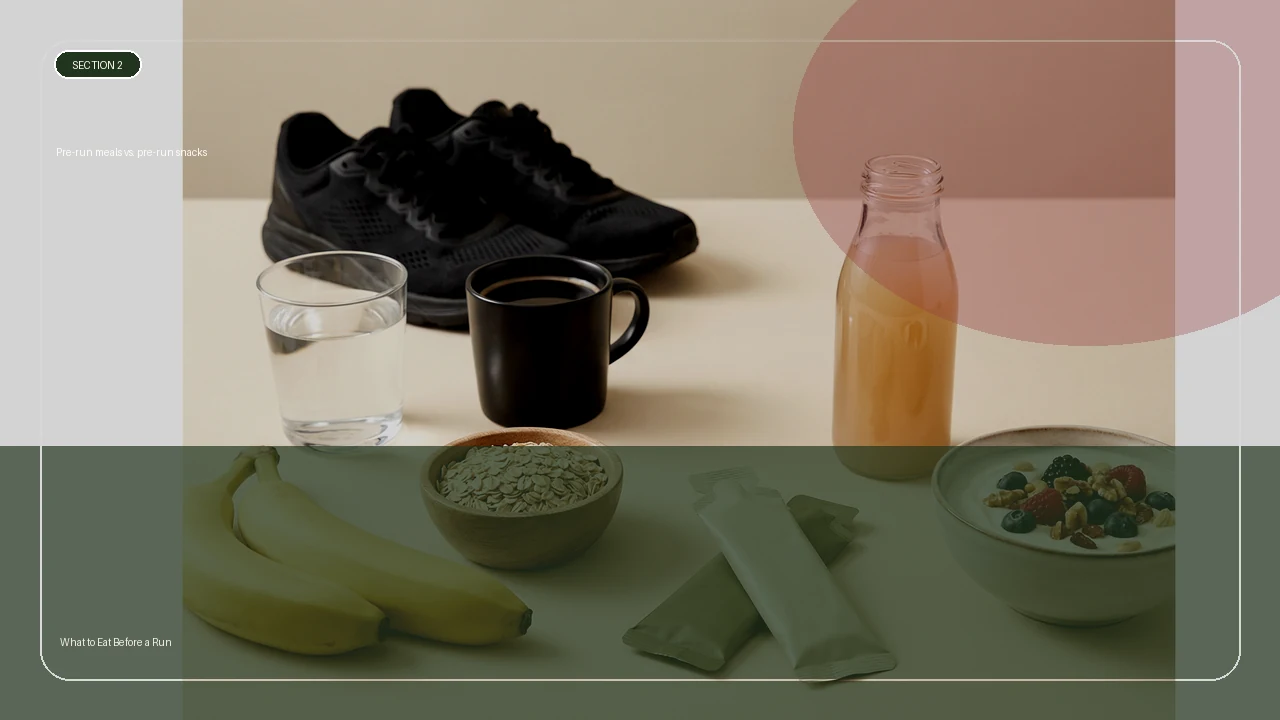
Pre-run meals vs. pre-run snacks
Understanding the difference helps you plan appropriately:
Pre-run meals (2-4 hours before):
- 300-700+ calories
- Mix of carbohydrate, protein, small amount of fat
- Eaten as a complete sitting
Pre-run snacks (30-90 minutes before):
- 80-250 calories
- Heavily skewed toward easily digestible carbs
- Quick to eat
Choose a full meal before a half marathon or weekend long run. A snack is enough for a 45-minute weekday run after work.
How to build a pre-run meal (2–4 hours before)
Structure your plate with majority carbohydrates, moderate protein, and low to moderate fat and fiber:
- Bowl of oatmeal with banana and a spoon of peanut butter
- White pasta with tomato sauce and small portion of lean meat
- White rice with scrambled eggs and minimal seasoning
- Whole grain bread with smoked salmon (if tolerated) and light cream cheese
Very high-fat or high fiber foods close to running can cause GI discomfort. Stick with familiar foods you’ve eaten comfortably before other workouts.
How to build a pre-run snack (30–90 minutes before)
Ideal snacks share these characteristics: mostly simple carbs, small portion, easy to chew and digest.
Concrete examples:
- Ripe banana (about 27g carbs)
- Slice of white toast with honey or jam
- Small handful of pretzels
- A few dates or dried fruit like dried apricots
- Rice cake with thin layer of nut butter
- Half an energy bar
Some runners tolerate a small amount of protein (spoon of yogurt), while others prefer purely carb-based options. Never try new packaged products for the first time on race day.
Best pre-run foods for every distance
These are examples to adapt to your preferences and dietary needs—vegetarian, vegan, or gluten-free alternatives can serve the same purpose.
What to eat before a short run (up to ~30–40 minutes)
Many people can handle this distance with a small snack or running off a recent meal:
- Half a banana
- Small rice cake with jam
- Few crackers with thin nut butter
- For very early morning run efforts: few sips of juice or sports drink, then focus on recovery breakfast afterward
What to eat before a 5K or 10K workout or race
These events typically involve higher intensity, making easily digestible carbohydrates key:
- 2-4 hours before: Plain bagel with honey and small yogurt cup
- 30-60 minutes before (optional): Small bunch of grapes or banana
Practice this exact meal and timing during tune-up workouts several weeks before an important race. Your body adapts to familiar routines.
What to eat before a long run (60–90+ minutes) or half marathon
Runs longer than an hour usually benefit from a more substantial pre-run meal plus consideration for in-run fueling:
- White toast with jam plus banana
- Bowl of oats with maple syrup and small handful of blueberries
- Toasted bagel with thin nut butter spread
Consider adding more carbs the evening before—extra serving of rice, pasta, or sweet potatoes at dinner. Also plan what you’ll eat during the run (energy gels, chews, or sports drink) and test these in training.
What to eat before a marathon or very long training run (2+ hours)
Marathon preparation typically involves carb loading the day before (aiming for 7-10g carbohydrates per kg of body weight), followed by a familiar breakfast 3-4 hours before start:
- Two slices white toast with jam and banana
- Plain bagel with small amount of peanut butter and honey
- One cup oatmeal with banana and drizzle of honey
Use the same or very similar pre-run meals for long training runs to refine your race day routine. For early starts (7:00-8:00 a.m. marathons), plan wake-up times accordingly—some runners set alarms for 4:00 a.m. to allow proper digestion.
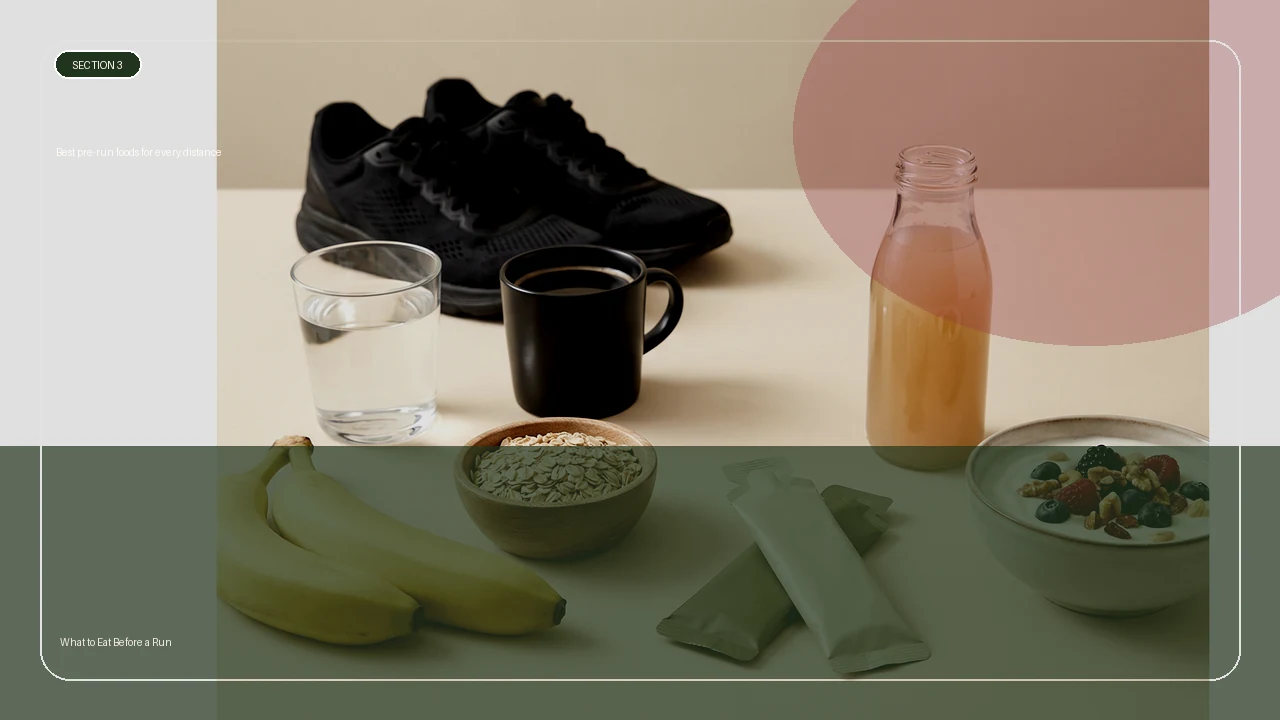
Hydration and pre-run drinks
Starting well-hydrated matters for comfort and running performance. The goal isn’t to chug water right before running—that causes sloshing and discomfort. Instead, sip water regularly through the day.
Plain water works for most situations. An electrolyte drink adds sodium for hot conditions or heavy sweaters. Carbohydrate-containing sports drinks provide both fluid and quick energy for longer efforts.
Individual fluid needs vary with climate, body size, and pace. Pale urine generally indicates adequate hydration.
Best pre-run beverages
- Water: Glass with pre-run meal, small sips in the hour before
- Electrolyte drink: Useful in heat or for salty sweaters
- Diluted fruit juice: Provides carbs plus hydration
- Sports drink: 4-8% carbohydrate concentration works well
- Coffee: Some runners find 60-90 minutes before running helpful (provides 2-5% performance boost for caffeine-tolerant individuals)
- Coconut water: Natural electrolytes, though lower sodium than sports drinks
- Oat milk or similar: Can work in smoothies for liquid breakfast options
Avoid highly caffeinated or unfamiliar drinks before important workouts or races—GI upset affects roughly 20% of runners with new caffeine sources.
What to avoid before a run
Certain foods high in fat, fiber, or irritants increase risk of digestive discomfort when eaten too close to running:
- High-fat meals: Fried foods, fatty meats, heavy cream sauces—these digest slowly and delay gastric emptying
- Spicy foods: Capsaicin can irritate the digestive tract
- High fiber foods: Beans, raw vegetables, whole grains in large quantities—fermentation causes gas and bloating
- Carbonated drinks: Trapped gas creates discomfort
- Sugar alcohols: Common in “diet” products, can cause GI distress
These foods can be part of a healthy diet—just not ideal in the few hours before running. Steer clear of the wrong foods close to start time, and note your individual triggers.
Early-morning runs: what to eat when you’re short on time
The challenge of a 5:30-7:00 a.m. start leaves little time to eat and digest. Two main approaches work:
- Wake slightly earlier for a small meal (requires earlier bedtime)
- Rely on a very small snack plus stronger focus on dinner the night before
Quick morning options:
- Half a banana
- Few bites of a soft granola bar
- Small glass of sports drink
- Energy gels or chews (for sensitive stomachs)
Runners with very sensitive stomachs often do best with mostly liquids before short morning runs.
The early riser (up 2+ hours before running)
If you wake early enough for a full meal:
- Oats with banana
- Toast with scrambled eggs
- Yogurt with cereal and fruit
- Simple smoothie with banana, oat milk, and honey
This schedule allows flexibility with slightly higher fiber or healthy fats content, as there’s time to digest. Keep breakfast consistent once you find what works.
Straight-out-of-bed runners
Focus on very simple options eaten 15-30 minutes before:
- Half a gel or few chews
- Small portion of grain bread with jam
- Eat half a banana
- Few dried apricots
Boosting carbohydrate intake at dinner (extra serving of white rice, pasta, or sweet potatoes) supports early runs when pre-run eating is limited. Experiment on non-critical training days.
Using energy gels, chews, and sports drinks in your fueling plan
Energy gels and chews are concentrated source options of carbohydrates designed for use during longer runs—typically 20-30g carbs per packet. They can also work shortly before race starts (one gel 10-15 minutes before the gun).
For runs longer than 60-75 minutes, many endurance athlete runners take one gel every 30-45 minutes. Professional athletes and recreational runners alike benefit from experimenting with timing.
Key tips:
- Take gels with water rather than full-strength sports drink to reduce GI stress
- Test specific brands and flavors in training—new products cause GI issues for roughly 30% of runners on first use
- As a general rule, practice with the same products you’ll use on race day
A sports dietitian can help dial in more personalized recommendations for your specific needs and goals.
Personalizing your pre-run fueling
The best pre-run eating pattern is individual. It depends on gut tolerance, cultural food preferences, schedule constraints, and training goals.
Track these variables:
- What you ate and when
- Run type and distance
- How you felt (energy, stomach comfort, performance)
Adjust one variable at a time—portion size, timing, or specific foods—to understand what makes the biggest difference.
Ask yourself: Do you feel better on whole grain bread or white toast? Does coffee help or hurt your runs? Do different foods work better for main meals versus snacks? Does your body need more fuel on certain days?
Nutrition plays a critical role in running performance, but there’s no universal formula. Smart fueling is a skill that develops over weeks and months of practice, just like running itself. Start experimenting, keep notes, and build your personalized routine from there.
For more tips on nutrition and training, check out our additional resources to help you optimize your pre-run fueling strategy.